
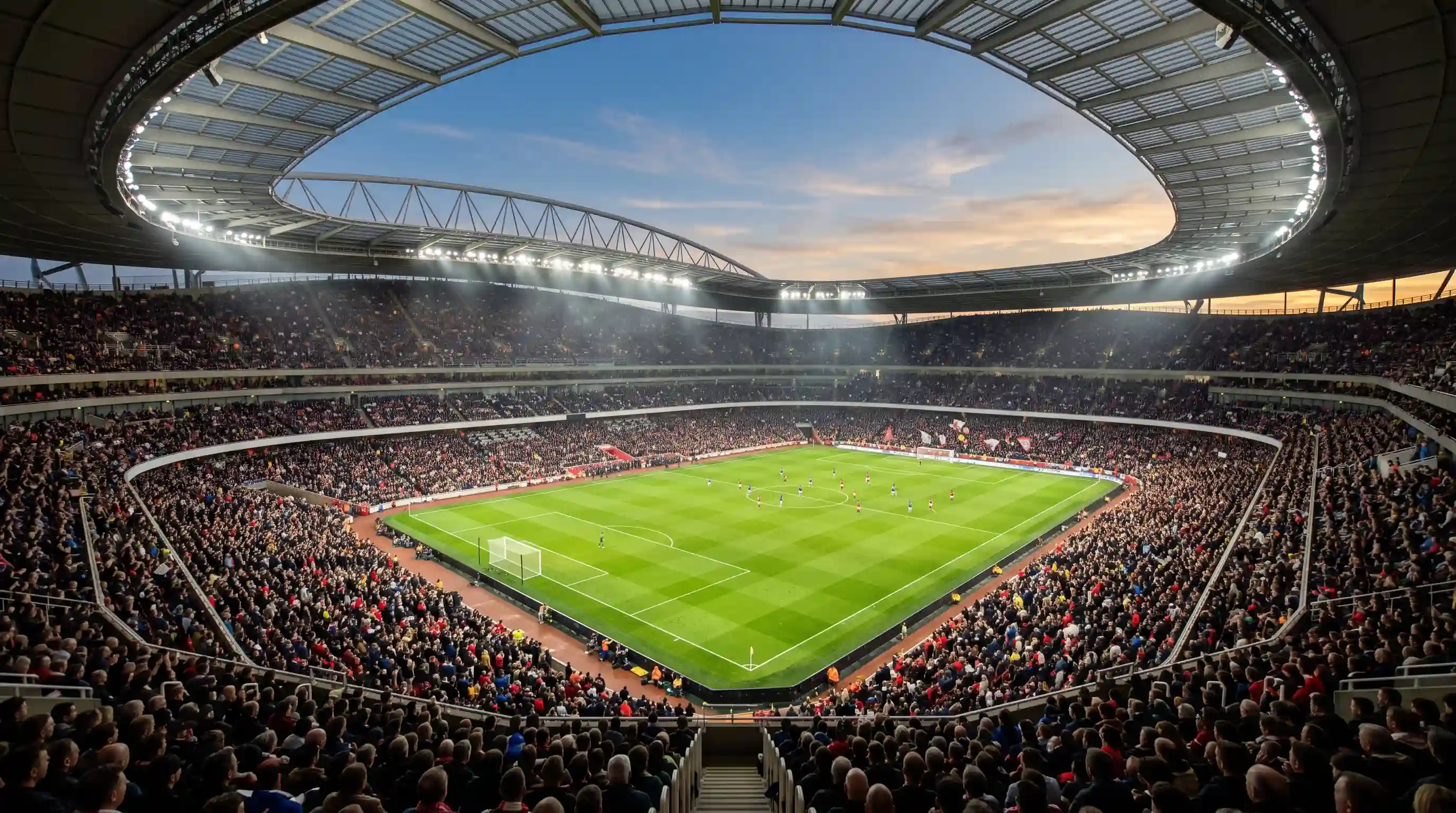
How to Choose the Best Seats at a Football Stadium: A Complete Guide
In short: there's no single "best seat" at a football stadium — only the best seat for you. If you want noise and atmosphere, head for the ends behind the goals; if you want the clearest, most complete view of the match, choose the side stands, ideally the lower tier to sit close to the pitch or the upper tier for a more tactical, big-picture view. Families are best served by dedicated family areas, while anyone after comfort and service looks to hospitality. The variables that matter are always the same: budget, the kind of experience you want, who you're going with, and any specific needs you have.
Buying a ticket for a football match sounds simple — until you're staring at a stadium map with dozens of sections, codes and price bands. Home end or side stand? Lower tier or upper tier? If you don't go often, or if it's your first time at a ground you don't know — say you're a traveller catching a match abroad — it's easy to overpay for a seat that isn't what you wanted, or to end up with a sharply angled view when you were hoping to look straight down the pitch.
This guide explains how a football stadium is laid out, what really changes from one section to another, and how to choose the right seats for what you want. The principles apply to most European stadiums: the names of the sections change from ground to ground, but the logic stays the same.
How a football stadium is laid out
Almost every football stadium, whatever its architecture, is built around the same shape: four sides surrounding the pitch, often split into two or more stacked tiers. Understanding these four zones is the first step to reading any stadium map.
The ends (behind the goals). These are the sections at the two short ends of the pitch, behind the goals. Traditionally they house the most vocal supporters — this is where you'll find the singing, the flags and the strongest sense of a crowd. The atmosphere is the best in the ground, but the view is more angled and, in the lower rows, closer to pitch level: you follow the play near the goal below you well, while the action at the far end looks distant and foreshortened. The home end is where the loudest home fans gather; the away end is the equivalent for visiting supporters.
The side stands (the long sides). These are the sections running along the two long sides of the pitch, parallel to the halfway line. They give the most balanced, central view, because you watch the game face-on and see play develop from left to right. They're usually the most sought-after sections and, as a rule, the most expensive — especially the central seats near the halfway line. In many grounds one side is the "main stand" (with the dugouts and press) and the other a slightly cheaper opposite stand.
The tiers (lower and upper). Many stadiums rise over two or more stacked tiers. The lower tier puts you closer to the pitch: you feel the speed of the game, the tackles and the physicality of the players more directly. The upper tier sits you further back and higher up, giving you a more elevated, bird's-eye view — ideal for reading shape, off-the-ball movement and tactics. Neither is objectively better: it depends on what you want to see.
The corners. These are the sections in the four corners of the ground, where an end meets a side stand. They're often a smart compromise: cheaper than the central side stands, but with a more open, front-on view than the ends themselves. If you're after value for money, the corners are always worth a look.
Atmosphere or view? The trade-off to understand before you choose
This is the central decision that shapes your whole choice of seat: do you want to experience the match, or see it as well as possible?
The ends, behind the goals, drop you into the heart of the support. If your aim is to sing, stand, feel the collective energy and live the game as a shared occasion, that's where you want to be. The price you pay is a less clean view: you're low down, often standing, and the action at the far end looks a long way off.
The side stands, especially in the upper tier, give you the best view. You watch the pitch face-on, see the whole playing surface and pick up the movement and geometry of both teams. In return, the atmosphere is more reserved: there's applause and conversation, but rarely ninety minutes of singing.
There's no absolute right answer. A passionate fan who wants to feel the match and a first-timer or neutral who wants to understand the game and enjoy the spectacle will, quite rightly, make opposite choices. What matters is being honest about what you want from that particular match.
Choosing your section by what you want
The table below sums up the main zones with their pros, cons and who they suit best. Remember that names, numbering and availability change from ground to ground: always check the map of the specific stadium.
| Zone | Pros | Cons | Best for |
|---|---|---|---|
| End / behind the goal | Best atmosphere, singing, often cheaper | Angled, low view, often standing | Fans who want atmosphere and the crowd experience |
| Side stand (lower tier) | Central view, close to the pitch, intensity of play | Higher price, less overview | Fans who want to be close to the action with a good view |
| Side stand (upper tier) | Big-picture, tactical view of the whole pitch | Further from the pitch, less physicality | Fans who want to read the game and see the full spectacle |
| Corners | Good balance of price and view | Off-centre, slightly angled | Anyone after the best value for money |
| Family areas | Calmer, safer environment, services | Quieter zone, away from the loud support | Families with children, first-time visitors |
| Hospitality / VIP | Comfort, included services, easier access | Higher price | Anyone wanting comfort, special occasions or business use |
Fans who want atmosphere: the home end
If you go to the match mainly for the support, the home end is your place. Expect to stand, sing and experience the game at full intensity. It's often one of the cheaper options too. Bear in mind that many grounds have specific rules for singing sections, and they're not ideal if you're bringing young children or want a relaxed afternoon.
Fans who want the best view: side stand and upper tier
For the fullest, most front-on view of the game, head for the side stands. The lower tier keeps you close to the pitch; the upper tier, especially the central seats, gives you that classic "TV camera" view where you can see every phase of play develop. It's the ideal choice if you want to follow the tactics, or if it's your first time seeing that team live.
Families: family areas
Many stadiums set aside dedicated family sections, with a calmer atmosphere, tailored stewarding and sometimes dedicated facilities or reduced prices for children. If you're bringing kids, it's almost always the sensible choice: a decent view, a relaxed environment and more comfort for younger fans.
Comfort and hospitality seekers
If you want to enjoy the match without any hassle — comfortable seats, easier access and services like catering or a lounge — hospitality and VIP areas are built for exactly that. They cost more, but they offer a complete experience, ideal for special occasions or if you're bringing guests. What's included varies a great deal from ground to ground and from package to package.
What affects the price of a section
The price of a ticket doesn't depend on the section alone. For the same match, the central seats in the side stands and the lower tier usually cost more, while ends, corners and upper tiers tend to be more affordable. But several other factors feed into the final price:
- The match category. Many clubs split fixtures into price bands (often category A, B, C): a marquee fixture costs more than a mid-table game, for the same seat.
- The exact location of the seat. Within the same section, the row and how close you are to the halfway line can change the price.
- The tier. As noted, lower and upper tiers normally have different price lists.
- The included services. Hospitality, lounge access, a numbered seat and extra comforts all push the price up.
A practical tip: don't just look at the number. A central upper tier can give you a better view than a heavily side-on lower tier, for less money. Think about the relationship between what you pay and what you see.
The away section: how it works when you travel to a match
If you follow your team away from home, there's no choice of section to make: visiting supporters are allocated to a dedicated away section, usually in a corner or part of one end, kept separate from home fans for safety reasons.
This has a few practical consequences: the view is what it is (often angled and off-centre), access is through dedicated turnstiles, and there can be specific rules on timings, checks and how tickets are sold. In many cases away tickets are sold only to members or season-ticket holders of the visiting club, or through official channels. If you're planning a trip, always check the sale conditions for that specific match in advance, because they vary from club to club and game to game. This is doubly important for travelling and neutral fans abroad, where local rules and membership requirements may not be obvious.
Practical examples across European stadiums
The principles above apply to Europe's biggest grounds, each with its own names and layout. Here's how to reason about them, without getting into maps or prices that change over time — for up-to-date detail, always refer to the single-stadium guide and official channels.
- Anfield (Liverpool). A ground famous for the atmosphere of its home end, where the singing is at its loudest, alongside side stands that give a more balanced view. The choice between end and stand really changes the day out. See our Anfield guide.
- Old Trafford (Manchester). A large, multi-tier stadium where the difference between the lower and upper tiers, and between the ends and the side stands, is clear in terms of distance and view.
- Santiago Bernabéu (Madrid). A multi-tier ground with clearly distinct ends, side stands and a main stand; the choice of tier and side shapes the experience. More in our Santiago Bernabéu guide.
- San Siro (Milan). A three-tier stadium with historic ends for the vocal support and wide side stands — here the choice between second and third tier changes the view considerably.
In every case, the logic is the same: decide first what you're after (atmosphere or view, closeness or overview, tight budget or comfort), then find the section on the map that matches.
Frequently asked questions (FAQ)
What are the best seats at a football stadium?
There's no single best seat: it depends on what you want. For atmosphere it's the home end; for the view it's the side stands (lower tier for closeness, upper tier for the overview); for comfort it's hospitality. The best seats are the ones that fit your budget and the kind of experience you want.
Is it better to sit behind the goal or along the side?
Behind the goal (the ends) gives you more atmosphere but a lower, more angled view; along the side (the stands) gives you a more central, complete view but a calmer environment. Want the support? Choose the end. Want to see the whole game clearly? Choose the side stand.
Where do you get the best view at a match?
Generally from the long sides of the pitch (the side stands), because you watch the game face-on and follow how play develops. The central area, near the halfway line, offers the most balanced view.
What's the difference between the lower and upper tier?
The lower tier keeps you closer to the pitch, with a stronger sense of the speed and physicality of the game. The upper tier sits you further back and higher up, giving a more tactical, big-picture view. The upper tier is often cheaper, too.
Where do away fans sit?
Visiting supporters are allocated a dedicated away section, usually in a corner or part of one end, kept separate from home fans. You can't pick your exact seat as home fans can, and specific sale rules often apply.
Are the most expensive seats worth it?
Not necessarily. The priciest ticket isn't always the best for you: a central upper tier can give you a better view than a heavily side-on lower tier, for less. Always weigh up price, position and the kind of experience you want.
Choose your section and buy with confidence
Once you understand how sections work, the choice becomes much simpler: start from what you want, check the stadium map and find the right zone. When you're ready, you can browse the available matches and choose your section on TicketGol, comparing your options to find the ticket that suits you best.
Or browse all the available stadiums and pick your favourite spot for each event.
Related Insights
View all
Champions League 2026/27 schedule: full fixture dates and matchdays
The Champions League 2026/27 schedule is confirmed. Here are all eight matchday dates, when the Premier League clubs play and the key dates on the road to the final on 5 June 2027 at the Estadio Metropolitano in Madrid.

How to buy Champions League tickets: the complete 2026/27 guide
Everything you need to know about Champions League tickets for 2026/27: how to buy safely, the key dates, what drives the price and practical tips for attending a match anywhere in Europe.
Mobile football tickets: how they work and how to use them
What a mobile football ticket is, how you receive and store it on your phone, how to enter the stadium with a QR code and how to avoid the most common problems at the gate.